· By IIWEY
Would you rather see more—or see two views in more detail?
A commuter and a passenger-facing driver can make different, equally sensible camera choices. Here is how the trade-off changes with the evidence each needs.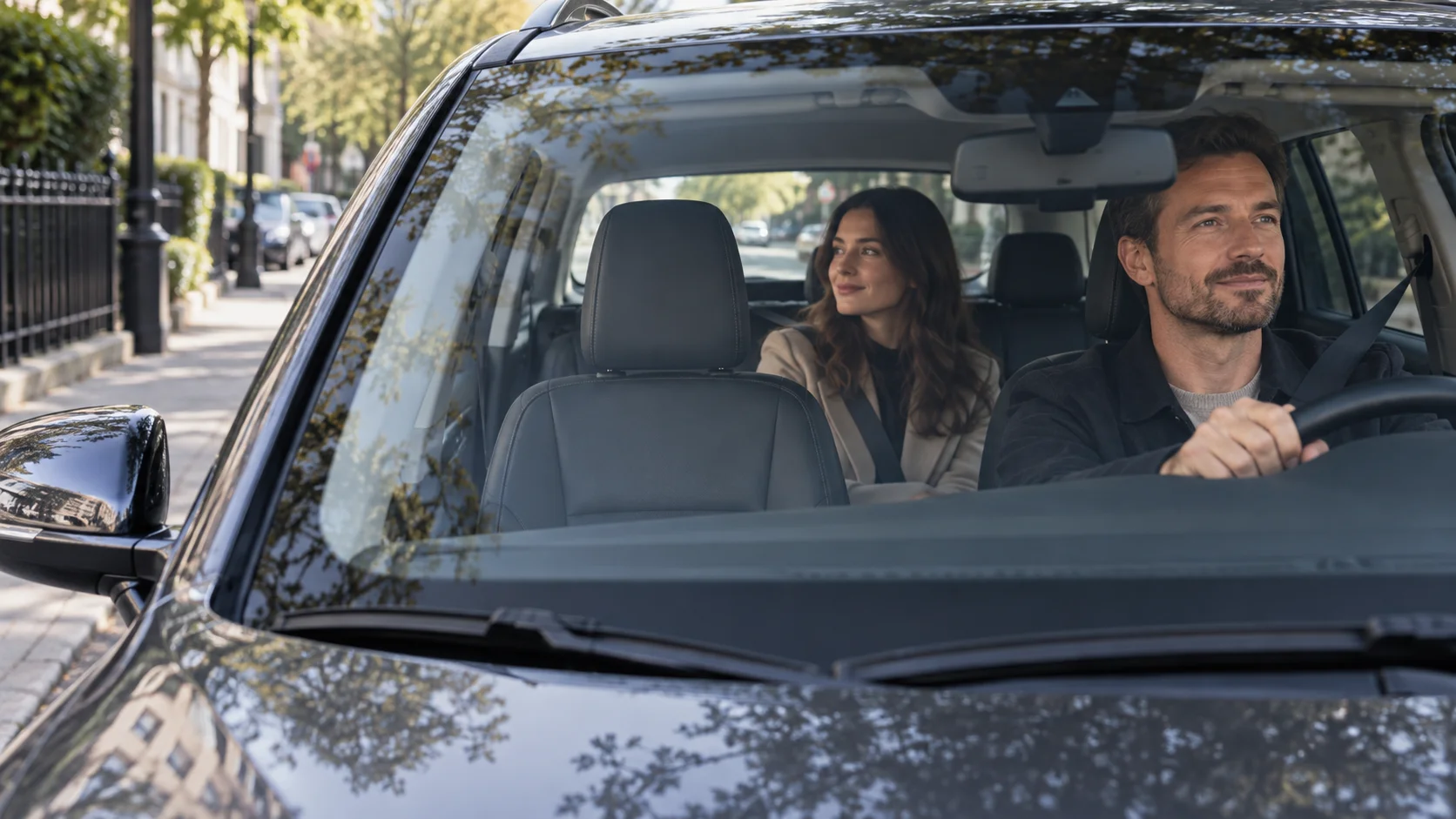
The same budget can solve different problems
Consider a driver whose main concern is traffic ahead and behind on a highway commute. Two well-chosen road views address that concern directly. Now consider a driver carrying passengers every evening. The road views remain useful, but they cannot explain an interaction inside the car.
Buying the highest channel count is not automatically the better decision for the first driver. Buying only the highest front resolution may leave the second driver's main need unmet. A useful comparison starts by naming what would be missing from the recording, not by ranking feature badges.
Coverage changes what questions the recording can answer
A front view may establish an approach or lane movement; a rear view may establish how a following vehicle approached. A cabin view adds interior context. Side-facing views may add activity near the vehicle, subject to lens direction, window geometry and obstructions.
A view that exists on paper may still be partly blocked by a seat, passenger, pillar or tint. Multi-channel coverage means separate views with real limitations. It should not be interpreted as a single seamless perimeter recording.
Detail changes what you can resolve inside a view
The approved IIWEY comparison illustrates the distinction with Q7 and N9: Q7 lists dual-4K front/rear recording, while N9 lists five 1080p views. One prioritizes detail in two directions; the other prioritizes the number of simultaneous views.
A five-view system does not make the two-view system obsolete. Equally, a sharper front frame does not compensate for a missing cabin view. In either case, motion, light and placement still influence useful detail. No resolution label guarantees every plate will be readable.
More cameras have practical costs beyond the price
Each useful extra view also adds files to find and storage to retain. Rear-camera installation introduces a cable route; multiple views need a placement check. For long shifts, it matters how quickly older ordinary files are overwritten and how you preserve the clips from every relevant channel.
These are reasons to choose deliberately, not reasons to avoid a multi-camera system. When the extra view addresses a real incident type, the effort can be justified. When it does not, a simpler system may be the more satisfying purchase.
Write the deciding sentence before choosing
Try: ‘I need front/rear detail and GPS more than interior coverage’, or ‘I need cabin and side context even if not every channel is 4K’. Then compare two or three exact models that fit that sentence.
Check simultaneous recording configurations and the selected bundle before paying. The decision becomes clearer when the extra cost can be tied to a view, a level of detail or a capability you will use.